Bankruptcy filers: got a 1099-c? I’ve got the remedy

If you’ve been to bankruptcy court recently, or are thinking of filing, you might be shocked out of your shoes when you receive a 1099-C from one of your creditors.

A what???

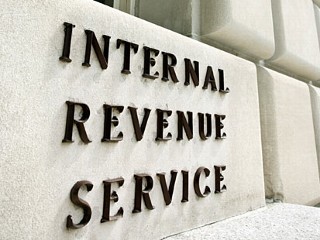
IRS form 1099-C is issued when there is cancellation of debt that might be considered income.

Now you really lost me, you say!

Whenever a loan is forgiven, accountants view this as a type of income to the “lucky” debtor. And wherever there is income, the IRS has a form for it. Enter Form 1099-C, stage left.

You are of course expected to add up your 1099’s and include this income on your return when you do your taxes. If you add in the forgiven income found on 1099-C, that will of course raise your tax (or lower your refund).

But there is a remedy, just as I promised. It’s IRS form 982, where you can explain that you don’t really owe this phantom tax because you filed a bankruptcy case. You just need to check box 1a on the form (talking about “discharge of indebtedness in a title 11 case).”

File that, and the problem should be averted.

You can get a form 982 right here.


By Doug Beaton

Posted in Practical tips | Comments closed

Bankruptcy claims still on the rise in Massachusetts

2010 is in the books, and it officially set a four year high for bankruptcy cases in Massachusetts.

So what to make of the news?

Misery always loves company, for one thing, so if you haven’t filed a case yet, rest assured you have plenty of fellow travellers.

Also, bankruptcy filings are a lagging indicator, meaning that it is not a mistake to hear that the economy is getting better while at the same time people are plowing down the doors a the bankruptcy court. Recession, depression, or growth depends on GDP statistics; actual improvement in the streets takes more time.

Unemployment and foreclosures are still relatively high too, another reason for BK’s to keep coming.

For the numerically obsessed, there were 23,618 bankruptcy cases filed in Massachusetts in 2010, a 13 % increase. Nationally, just a shade under 1.6 million bankruptcy cases were filed.


By Doug Beaton

Posted in Bankruptcy News | Comments closed

Another take on short sales and bankruptcy

Just a little while ago, I wrote this piece on short sales versus bankruptcy, with the general view that bankruptcy would be a much more preferable option for the majority of homeowners in trouble.

But you might also want to consider the other side of the equation. Florida bankruptcy lawyer Chip Parker has posted a short Q and A with real estate attorney David Heekin, who explains some of the advantages to the short sale procedure. You can read it here.

Attorney Heekin’s primary points in favor of short sales are that you might be able to qualify for a FHA or Fannie Mae mortgage quicker if your bankruptcy case is followed by a short sale, instead of a foreclosure on the property. Note that this assume the real estate market turns around quick enough that you would want to get involved in owning again — and no one has a crystal ball to tell us what the market is really going to do five or seven years from now.

Heekin also posits the idea that altruistic debtors may not want to leave that their old neighborhoods with one more empty foreclosed home depressing the area. Point taken, although I’d bet that Lawrence and Methuen folks are on the whole a lot more neighborhood oriented than Florida real estate carpetbaggers.


By Doug Beaton

Posted in Foreclosure, Real estate | Comments closed

Forgetfulness is not rewarded in bankruptcy court

Here’s some good advice from California bankruptcy attorney Douglas Jacobs: be sure tell your attorney everything about all your income and expenses.

Attorney Jacobs tells a little story about one of his clients who failed to do exactly that. This guy showed up at the meeting of creditors and suddenly “remembered” that he got a little income from a trust. That raised the trustee’s eyebrows, says Jacobs, and ultimately led to a letter from the US trustee strongly suggesting he consider a Chapter 13 case.

The attorney might be able to amend the schedules and find some extra expenses that offset the trust income, but this debtor will surely be facing more hearings, more litigation, and more money spent on the case. Don’t complicate a simple bankruptcy case — make sure your lawyer knows all of your income sources and all of your household and business expenses BEFORE the case gets filed in court!


By Doug Beaton

Posted in Practical tips | Comments closed

Chapter 13 bankruptcies might require you to do your taxes quickly

A reminder, if you are thinking about filing a Chapter 13 bankruptcy case. You might want to consider doing your 2010 taxes quickly, and not putting it off until April 15th, or heaven forbid, October.

One reason is that Chapter 13 plans have to pay priority claims in full. And the priority claim that is usually at the head of the line is your currently due taxes.

A Chapter 13 trustee may not be able to recommend that your plan be confirmed unless they are sure that your taxes are covered. And how can anyone be really sure how much tax is owed until the tax return is prepared?

So if you want that Chapter 13 plan to sail through the system, better get going on a trip to the tax man!


By Doug Beaton

Posted in Chapter 13, Taxes | Comments closed

Is Zillow an acceptable way of valuing real estate in bankruptcy court?

The website Zillow.com (and other sites like it) is being used increasingly by people to figure out the value of real estate, whether they are buyers, sellers, or just homeowners, and whether they are professionals or amateurs at the real estate game.

Beyond the weird name, (why must all websites have such weird names?), a pretty basic question to ask is whether Zillow “zestimates” are recognized in bankruptcy court.

Just a few months ago I wrote that in Massachusetts, bankruptcy judge Melvin Hoffman issued an opinion in the Darosa case where he expressed dismay and skepticism about Zillow estimates, and ruled against the person who had submitted one. So if your case is assigned to Judge Hoffman, you can probably assume the answer to the question in the title of this post is “no.”

Of course, complicating matters you won’t know if your case is assigned to Judge Hoffman until after you file it.

And what about all the other bankruptcy judges in the nation? I plugged the term “Zillow” into the Casemaker legal database. In addition to the Judge Hoffman’s Darosa opinion here in Massachusetts, Casemaker found only one, that’s right, one other bankruptcy opinion in the nation mentioning the word Zillow.

The other case is from the Eastern part of Virginia, where bankruptcy judge Stephen St. John simply ruled in the Wyche case that a Richmond law firm could not claim extra fees for running off photocopies of Zillows.

So there you have it — a trick question that actually has no real answer — yet, unless if you are in Massachusetts before Judge Hoffman. If there is any news on the Zillow front, I’ll keep you posted.


By Doug Beaton

Posted in Real estate | Comments closed

Delayed mortgage aid for jobless might show up in March

A new federal program that could help thousands of unemployed homeowners in Massachusetts temporarily cover their mortgages is expected to finally be up and running by mid-March, months after it was scheduled to start.

Massachusetts is set to get $61 million of the federal funds.

Homeowners should be able to apply on or about March 19 for the $1 billion national program, designed to provide bridge loans of as much as $50,000 to qualified homeowners in 32 states, including Mass.

The kicker — you will literally have to win a lottery to get a chance at a bridge loan.

There will be a flood of applications and that demand will exceed the available money. Homeowners will be randomly selected for consideration during a 10-day application period.

For those willing to try, a well-timed bankruptcy filing (i.e. right now), could provide a “bridge to the bridge loan.”

On the other hand, for those that are not winners, there are several bankruptcy strategies that can either help you stay in your home, or walk away from an underwater property without being crushed under a mountain of personal debt. If you live in the Merrimack Valley Lawrence and Haverhill area and are facing this situation, feel free to give me a call and we’ll talk about it — no obligation!


By Doug Beaton

Posted in Bankruptcy News, Real estate | Comments closed

Apartment hunting after bankruptcy

If you’re thinking about filing a bankruptcy case, and worried about where you will live after you file, Maryland attorney Brett Weiss has some practical advice:

* Skip the large traditional apartment complexes (for example, Royal Crest in North Andover, although there are many others). They often have inflexible rules about credit checks.

* Concentrate on individual landlords, who may be more interested in whether you have a job or check coming in than any specific credit number. Luckily our area, whether you are from North Andover, Lawrence, Haverhill, Salem, Methuen or so on is chock full of houses owned by “mom and pop” landlords.

* If by chance you find a nice place, look into a rent-to-own arrangement. That way, if the market recovers, you could be building up a down payment toward ownership again. If it doesn’t, you just keep renting.

No matter what you hear, filing for bankruptcy rarely means not having a roof over your head!


By Doug Beaton

Posted in Practical tips | Comments closed

Short sales versus bankruptcy

A quick primer on the rules concerning short sales as opposed to filing personal bankruptcy:

Homeowners with underwater houses are tempted to look first at a short sale as a way out of their predicament. There are at least three drawbacks to this approach.

1. Short sales can still leave you with a debt that the bank or mortgage company wants to collect. What? The paperwork to complete the short sale essentially allows the lender to release its security interest in the property, but it does not necessarily absolve you of the debt. Are you prepared to read all the fine print and figure out if the bank still has a right to collect or not?

2. Short sales can sometimes trigger taxable income. If the residence is your primary home, you may be able to avoid this by relying on the federal Debt Relief Act of 2007 (which, contrary to its name, is in effect until December, 2012). But if you own a “two decker,” “three decker,” or any type of property that is not unambiguously a single family residence, watch out!

3. A short sale does not resolve any other financial issue you may have. It just allows a new person to take title to the home.

A bankruptcy filing, on the other hand, definitively discharges the your debt to the mortgage lender, avoids adverse tax consequences even for property that is partially rented, and often helps with other problems, like credit cards, as well. Just three reasons why for many homeowners a bankruptcy filing might be a smarter move than a short sale. And here’s another — with bankruptcy, there is no need to expend effort finding buyers and dealing with brokers; you can get out of the home with your peace of mind intact.


By Doug Beaton

Posted in Real estate, Secured loans | Comments closed

Beat the winter blues by staying mentally tough

If the endless winter of 2011 has got you down, here are a few links that might help:

Ten winter depression busters: (Psych Central).

How to stay mentally tough: (MLive.com).

Outsmarting the elements: (Boston Globe).

Stay warm out there!


By Doug Beaton

Posted in Just for fun | Comments closed
Call now: (978) 975 - 2608