Cars and bankruptcy

The recent Supreme Court decision in the Ransom case got a lot of bankruptcy academics interested again in the subject of how the Bankruptcy Code treats debtors with automobiles and trucks (which is pretty much all of them). It also may have some debtors nervous about how they (and their rides) will be treated if they file a bankruptcy case.

For the most part, there is no reason to worry. For the most part.

Rather than being about the ability to keep a car after a bankruptcy case, Ransom is really about means-testing, and who will qualify for Chapter 7 straight discharges, as opposed to Chapter 13 repayment plans.

As such, the case has no influence whatsoever on debtors whose incomes are under the state average for their household size. Repeat: if your income is under the state median, there has been no change in the law to you.

Debtors with incomes above the state average, however, are still allowed to qualify for Chapter 7, by taking a series of deductions against their income — kind of like the tax return process. (Insert groans here)! One of those deductions is for vehicles. Enter the Supreme Court.

What the Court said was that only debtors who actually have car loan payments, or lease payments, will be allowed to take the deduction for “vehicle ownership expense.” Debtors who own their cars outright will no longer be allowed this particular deduction.

So the universe of people who are affected by the case is essentially debtors with above average incomes and one or two cars they own outright with no loans against them.

But wait! Is it possible that even these folks may be able to skirt the Supreme Court ruling? It turns out it may be so. The Ransom case itself was a Chapter 13 case, and there is at least one law professor out there who has fashioned an argument that it therefore does not apply to Chapter 7 means testing at all.

Aggressive debtors in Massachusetts or New Hampshire might want to be one of the first to test this theory out in court. Until we get a ruling from a local judge on the issue, it looks like the situation will still be somewhat uncertain. But until then, the vast majority of bankruptcy debtors can safely drive on!


By Doug Beaton

Posted in The Bankruptcy Code | Comments closed

Wife can’t sue husband’s bankruptcy lawyer

With two weeks of the new year behind us, its time to take a look at the first of the 2011 bankruptcy opinions from our local judges.

In a bit of an odd case (is this an omen for the year ahead?) from Western Massachusetts, bankruptcy judge Henry J. Boroff ruled that a non-filing wife couldn’t sue her husband’s lawyer for malpractice — at least not in the bankruptcy court. Massachusetts state court, well, that could be another story! The case is In re Surprise, 09-03056, decided January 14, 2011.

It all started in 2006 when the husband Donald transferred his interest in their house to his wife, Judith, for $10.00. This was supposedly done because the couple was about to divorce (although they never did). If you are considering bankruptcy, repeat this about 1,000 times: It is NEVER a good idea to transfer property to a relative for a low sum of money before you file. There probably isn’t a bigger “red flag” in the bankruptcy world, and every trustee in the whole country is on guard for it.

Anyway, Donald later filed a chapter 7 case, and, no surprise, it wasn’t long before the bankruptcy trustee went looking to undo this particular transaction. Now Judith wants to blame Donald’s lawyer for giving “bad advice.”

But Judith found she had more legal problems when she went to bankruptcy court to sue. She wasn’t the actual client of the law firm (Donald was) so she was on shaky ground jurisdiction-wise, and the bankruptcy court refused to get involved.

But please remember the moral of the story: It is NEVER a good idea to transfer property to a relative for a low sum of money before you file! Can’t say it too many times . . . .


By Doug Beaton

Posted in Practical tips | Comments closed

What drives bankruptcy filings: Credit cards or foreclosures?

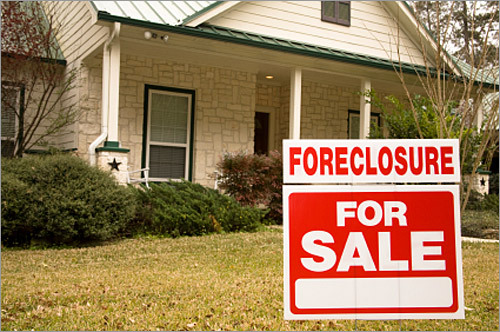
The final figures for 2010 are in, and the number of residential foreclosures in Massachusetts, no surprise, was sharply higher.

All told, 12,233 Massachusetts homeowners lost properties to bank seizure, nearly 32 percent more than in 2009, according to the Warren Group, which tracks real estate trends.

As bad as that sounds, do you think these foreclosures are the primary reason that Massachusetts bankruptcy filings are also on the upswing? If so, you may want to reconsider.

Attorney Dana Wilkinson recently wrote an article suggesting that while soaring foreclosures are often in the headlines, credit card debt is more typically what drives large numbers of people to file for personal bankruptcy.

Wilkinson’s article likens credit card companies to the “drug pushers of the financial world,” and discusses the marketing tactics companies use to snare consumers. Cash advance for a vacation, anyone?

The article is a good read, especially when he describes some of the junk-mail he himself has received from card issuers.

Here in the Lawrence area, bankruptcies seem to be evenly mixed between folks stuck with credit card debt, and those with troubled mortgages lurching toward foreclosure. And, of course, I have dealt with several couple who are dealing with both problems at the same time. Kind of like fighting a war on two fronts!

No matter, your financial situation, though; if you live in the Merrimack Valley, are struggling with credit card debt or foreclosure, and are thinking about a possible bankruptcy, I will do my best work to make it work for you!


By Doug Beaton

Posted in Credit cards, Foreclosure | Comments closed

Massachusetts legislature getting proactive on problem foreclosures

Well, 2011 is certainly getting off to a bang in the Massachusetts bankruptcy and foreclosure arena.

While bankruptcy is a federal matter, much of the action is on the state government side, as legislators on Beacon Hill are getting ready to introduce a slew of bills that will affect bankruptcy debtors.

First up is Secretary of State William Galvin, with a proposed bill to require all foreclosure cases to go through a Massachusetts state court judge before being valid. If the bill becomes law, Massachusetts will join 23 other states with so-called “judicial foreclosure” rules.

Another bill would force lenders to prove they possessed a valid title for a property before an eviction.

A third bill expected to be filed this week would require foreclosing banks to negotiate with homeowners by sitting down with a third-party mediator. It is meant to improve legislation signed into law last summer that forces lenders to wait 150 days to foreclose, instead of 90 days, if they don’t negotiate with a troubled borrower.

The effectiveness of the August 2010 changes are already being questioned, as many banks just prefer to wait the 150 days without negotiating.

Then there is legislation scheduled to be introduced this week that would provide new protections to homeowners who have lost their homes to foreclosure. Last year’s llegislation provided renters protection against evictions, but didn’t help former homeowners.

All in all, it is a busy time on the legal front for Massachusetts bankruptcy and foreclosure attorneys!


By Doug Beaton

Posted in Bankruptcy News, Foreclosure | Comments closed

Worried about your debts? Just be thankful you’re not a lawyer!

You think you have it bad?

Something like this? “I don’t open the e-mail alerts with my credit score,” he adds. “I can’t look at my credit score any more.”

But that’s not one of my bankruptcy clients talking — its a newly minted law school graduate. He’s only 27 years old, but has $250,000 in (mostly non-dischargable) student loans. According to the New York Times, “his secret, if that’s the right word, is to pretty much ignore all the calls and letters that he receives every day from the dozen or so creditors now hounding him for cash.”

This new lawyer is featured in a recent Times article that openly questions whether law school is a losing game. Even if you have no interest in ever attending, or don’t know any law students, the article is a good read, if only to make your own humble situation seem better by comparison.

I must admit that I have lost touch with the student situation. I didn’t know that Boston College Law School (pictured above) costs $50,000 per year. For a three year program, that’s $150,000 to call yourself a lawyer!

When I graduated from Northeastern University School of Law in 1993, I had $22,500 in debts, which I thankfully was able to pay down many years ago. It simply isn’t tenable to leave school with hundreds of thousands of dollars of debt, because, as the article explains, big paying jobs with big paying firms are few and far between.

The sad part (if you allow yourself any compassion for lawyers) is that these young people are NOT good candidates for bankruptcy, and under current laws will be playing dodge ’em will bill collectors, for years, perhaps for decades, and perhaps for lifetimes.


By Doug Beaton

Posted in Student loans | Comments closed

Worried about your debts? Here is some help for worriers

It should be no surprise that people considering bankruptcy are often beset with worry over their debts. And of course, the debt collection agencies play in to those fears, and do their best to fan the flames.

But worry need not consume anyone’s life. Here is some good practical advice from the Positivity Blog on how to beat the worry habit.

On this long holiday weekend, Hendrik Edberg’s fine article is a good read for those trying to conquer fear as well as debt.


By Doug Beaton

Posted in Practical tips | Comments closed

Hidden gem buried in Supreme Court bankruptcy decision

The Supreme Court’s decision in the Ransom case, where the court said that only debtors who actually pay car loans can take a means test deduction for “vehicle ownership expenses,” at first looks like a loss for the consumer debtor, and it is.

But read on, and you may find that the Supreme Court has given a little back to debtors — thrown them a bone, if you will — in the same case.

The court’s opinion hints that in cases where a Chapter 13 debtor’s expenses change during the life of a plan, it is the responsibility of the trustee or creditors to bring a motion before the judge to alter the plan.

Take for example, a debtor who has a car payment at the beginning of the bankruptcy case, but who makes the last payment during the course of the plan. That debtor now has some money freed up, that could be added to the plan so creditors get more. But under the Ransom ruling, it is not the debtor’s duty to alert the court to this, but rather up to creditors and trustees to make the noise if they seek extra funds.


By Doug Beaton

Posted in Bankruptcy News | Comments closed

Supreme Court deals bankruptcy debtors a blow on vehicle expenses

The Supreme Court issued a long awaited bankruptcy ruling on January 12th, but the result wasn’t very consumer friendly.

The Court limited the number of deductions that high income debtors can take on the means test, which “tests” them to see if they qualify for Chapter 7.

For above-average income debtors, the bankruptcy code allows deductions for “ownership expense” for each car and truck an individual or couple owns. At issue is whether the deduction applies when the debtors own a vehicle outright,

The court said no, the deduction only applies when the debtors actually have ownership expenses, in the form of a loan payment or lease payment on the vehicle.

This ruling reverses the situation in most parts of the country, as a majority of bankruptcy judges had decided the other way, in favor of the debtors. But the question has been controversial for several years, with bankruptcy scholars bitterly divided.

For high income debtors with 100% owned vehicles, all is not lost. They still can take a deduction for “vehicle operating expense,” and if their ride is old, sometimes an extra deduction of up to $200 for high mileage vehicles.

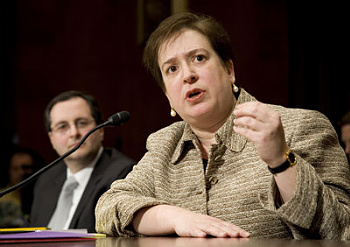
The opinion was issued by the newest justice Justice Elena Kagan (above). This was the first case she heard after being sworn in to the Supreme Court. The Court’s vote was 8-1, with only Justice Antonin Scalia dissenting. The name of the case is Ransom v. FIA Card Services, and you can read about it here.


By Doug Beaton

Posted in Bankruptcy News, The Bankruptcy Code | Comments closed

After the holidays comes the hard part — the bills

They are already on the way.

Or they’ll be here soon.

Now here comes the hard part of the holiday season — paying the bills. New Mexico bankruptcy attorney Gini Nelson has put up a nice post about how wanting a time out from everyday life during the holiday rush can cause trouble down the road.

If your bills have become unmanagable, whether or not holiday spending has anything to do with it — bankruptcy may be an option to consider. If you are in the Merrimack Valley, either in Massachusetts or New Hampshire, and want to find out more about how bankruptcy works or what it will cost, give me a call at (978) 975 – 2608.


By Doug Beaton

Posted in Practical tips | Comments closed

Foreclosure crisis spreads to Massachusetts suburbs, small towns

Rural and suburban Massachusetts is not immune to the ongoing foreclosure crisis.

That’s the message of an excellent Boston Globe article today. The piece emphasizes how people in small towns such as Asburnham in Central Mass. have struggled, especially with layoffs peaking.

Globe writer Jenifer McKim chronicles the Law family in Ashburnham, where husband Brian has been laid off, and the family beset with medical bills.

The Laws’ lender, National City Mortgage, agreed to let them make reduced monthly payments for a year. When the 12 months were up, however, it was no longer willing to compromise. The couple hasn’t made a mortgage payment in nine months.

Stories like these are unfortunately quite common throughout Massachusetts, and often result in a bankruptcy filing. Bankruptcy is often the only option where short sales have failed, and lenders refuse to co-operate. For example, the Laws attempted to persuade their lender to modify the mortgage, but were denied because Brian’s unemployment and Jennifer’s part-time work were not accepted as income, according to the Laws. PNC Financial Services Group Inc., which bought National City Mortgage in late 2008, declined to comment, citing privacy issues.

Jennifer Law doesn’t understand why PNC would sell the house to someone else at a loss, but won’t let her family renegotiate its payments to the equivalent price. And even if they somehow negotiate a loan modification, the Laws wonder, will their home’s value ever outgrow their ballooning mortgage balance? It seems unlikely, at least for a while. Late penalties and fees have added to their debt at the same time the property’s value has eroded.

The Globe article also emphases the importance of a positive attitude in dealing with the mortgage mess: “For today, I have a roof over my head. I have my husband by my side,’’ Jennifer said. “We are not defined by our circumstances, but how we choose to respond to them.’’


By Doug Beaton

Posted in Foreclosure | Comments closed
Call now: (978) 975 - 2608