Blockbuster of a bankruptcy!

Remember going to the video store?

Like pumping bath water from a town well, for many Americans a trip to the local Blockbuster outlet is also a quaint reminder of a bygone time.

Blockbuster filed for Chapter 11 bankruptcy today, a move that has been in the works for a while.

According to the Associated Press, the once dominant rental company is “reeling from mounting losses, rising debt and competitors that have better catered to Americans’ changed media habits.”

The bankruptcy, filed in New York, will wipe out Blockbuster’s badly battered stock, which was delisted from the New York Stock Exchange two months ago because it was nearly worthless.

All told, Blockbuster plans to reduce its debt from nearly $1 billion to about $100 million through the bankruptcy filing. The company has received commitments for $125 million in “debtor-in-possession” financing to repay customers, suppliers and employees during the reorganization. It is seeking access to $45 million right away to ensure it can pay movie studios to keep its stores stocked with DVDs.

Whether this can really help appears to be an open issue. Blockbuster has been losing market share for years to on-demand cable offerings, mail order operator Netflix, and supermarket boxes like the Redbox.

Blockbuster said in its filing it had about $1 billion in assets and $1.46 billion in debt.


By Doug Beaton

Posted in Bankruptcy News | Comments closed

Massachusetts foreclosures reach highest level of the year

The news on the foreclosure front just keeps getting tougher and tougher; Massachusetts foreclosures have now reached the highest level of 2010. The Warren Group counted 2,713 new foreclosure petitions filed in August alone. 2,307 foreclosure petitions were filed in July in Massachusetts.

Foreclosure petitions indicate the start of a new attempt to foreclose on a home or other real estate.

If you live in Massachusetts and are facing foreclosure, a bankruptcy petition can give you breathing room to re-organize your finances. In some cases, Chapter 13 of the bankruptcy code can be used to keep people in their homes who would otherwise lose them. Bankruptcy can also be used as leverage to bring recalcitrant lenders to the negotiating table concerning loan modification. And even if there is no possibility of saving a home, a bankruptcy petition will eliminate liability for a mortgage, so debtors can rebuild their lives without being hounded for a mortgage debt they will never be able to pay.


By Doug Beaton

Posted in Foreclosure | Comments closed

Filing for bankruptcy? Get it right the first time

While bankruptcy forms may be endlessly amended, there is much to be said for submitting them correctly at the outset of the case.

A good example of this can be found in the Yonjan case, a recent decision by bankruptcy judge William Hillman in Boston.

There the debtor was the former operator and president of a restaurant in Harvard Square. he had signed a personal guaranty for debts due to one of the restaurant’s suppliers, but neglected to list it on his original bankruptcy papers. When the restaurant itself filed bankruptcy, the supplier started chasing the debtor, filing suit against him in Taunton District Court.

Debtor Bikram Yonjan responded by trying to reopen his personal bankruptcy case for the purpose of listing the guaranty and the debt. The supplier complained, saying that reopening might allow the debtor to try to discharge some post-petition debts as well.

Judge Hillman wasn’t able to make a ruling based just on the papers submitted by the parties, and has now scheduled this case for a full trial! Obviously, if you have a personal bankruptcy case, this is the last way you want it to end. Hire a good attorney, give him all your paperwork and try your best to have your case complete the first time it is filed!


By Doug Beaton

Posted in Practical tips | Comments closed

A good way to screw up a bankruptcy case, part 2

It probably goes without saying that debtors should take care to file their bankruptcy under their own names and social security numbers — you wouldn’t want an accidental (or purposeful) mistake in this regard!

Since 2002, the first order of business at every debtor’s creditors meeting is to check the debtor’s photo ID and social security card.

Why anyone would come up with a scam involving filing a bankruptcy case under someone else’s name is beyond me, but I am probably not a “scam-oriented” as I should be.

Anyway, in Washington, DC this week, allegations of this kind of behaviour are being levied against a federal judge from New Orleans, Gabriel Thomas Porteous. Judge Porteous is having an impeachment trial in a Senate hearing room. It is the first impeachment trial since the Clinton spectacle in the late 1990’s, and the first of a sitting federal judge since the late 1980’s.

Judge Porteous, said to have ongoing battles with alcohol and gambling, faces four articles of impeachment, that include charges that Porteous lied on his 2001 bankruptcy petition and to FBI agents who were conducting background checks after he was nominated to the US Court of Appeals for the Fifth Circuit.

The judge’s secretary also paid the judge’s gambling markers at casinos, she testified, after he and his wife filed for bankruptcy in 2001, initially under false names. Prosecutors charge Porteous accumulated thousands of additional gambling debt after the filing and never disclosed it to the bankruptcy court.

The other charges agaisnt the judge involve taking money from bail-bondsmen in exchange for favorable results in court decisions.

Obviously, if you file a bankruptcy case, you don’t want it to end up like this!

With more than 15 years of bankruptcy experience in the Lawrence area, I do my best to keep my clients away from messes like this, so they can start rebuilding their lives quickly!


By Doug Beaton

Posted in Bankruptcy News | Comments closed

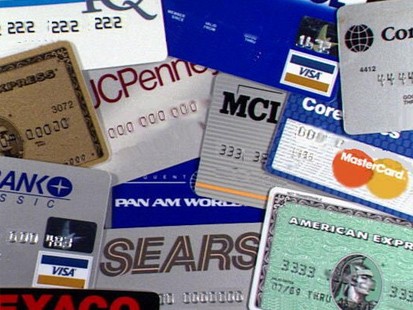
Are Americans really paying off thier bills, or are card companies just more ruthless?

Initial reports from the financial markets last week would seem to bode well for the consumer economy: according to syndicated columnist Michelle Singletary, Americans appear to be paying down the balances on their credit cards.

Trans Union said that average balances on bank-issued cards had dropped for a fifth consecutive quarter.

CreditKarma reported that consumer debt was down 3 percent since January.

But Singletary says the devil is in the details.

Much of the drop may actually be attributed to charge-offs — when card companies give up on their debtors and sell the debt to a collection agency. This often happens when accounts get 180 days behind in payments.

The analysis found that credit card debt for the second quarter of this year decreased by about $12 billion compared with the previous quarter. But banks charged off $21.8 billion during the same period. Given that the drop in outstanding debt is smaller than the dollar amount that was charged off, the difference of $9.8 billion is the amount of debt consumers accumulated.

The charge-offs indicate that many banks are continuing to experience deep losses, and this is one of the reasons why credit is still tight.

Singletary thinks this is just the skeptical look we need. Too many people are still leaning on credit in these lean times.


By Doug Beaton

Posted in Credit cards | Comments closed

Ever get a Robo-call on your cell phone?

If bill collectors have ever used an auto-dialer (a.k.a. “robo-call”) to ring you up on your cell phone, they could be in big trouble.

It is not the bankruptcy code per se that prevents this, but a related federal consumer protection law called the Telephone Consumer Protection Act. Florida attorney Chip Parker has posted a nice article on how this law works here.

The key to the TCPA is that every single call that violates it is subject to a $500 penalty, so collection agencies that are in violation can rack up a huge liability fast.

One of the catches, though, is that if your cell phone is your only phone, and therefore the only place you can be reached, call to that number are allowed. You have the option however, of informing the creditor that they are calling a cell phone, at which point they are required to honor your request that they stop calling it.


By Doug Beaton

Posted in Practical tips | Comments closed

Bankruptcy world turned upside down

Alumni magazines are often a quick read and a throw-away, but I just got one from my dear old alma mater (Northeastern U.) that caught my eye. Professor Daniel Austin wrote a nice article entitled “Consumer Bankruptcy: Staggering Towards Coherency.” You can read the full article here.

Professor Austin’s thesis is that the 2005 BAPCPA amendments enacted by Congress turned the world upside down for consumer bankruptcy law. These changes were intended to make it harder for financially strapped consumers to be discharged from all debts through a Chapter 7 liquidation, but instead to be nudged towards repaying part of their debt through a Chapter 13 plan.

Austin notes this scheme has failed to accomplish what it set out to do: “Of the 1.4 million consumer bankruptcy cases filed in 2009, 71 percent were Chapter 7, about the same percentage as before BAPCPA.”

Still, Austin thinks that “in spite of itself, bankruptcy under BAPCPA is making fitful steps toward coherency.” He points to the recent Supreme Court decision in Hamilton v. Lanning, where the court voted 8-1 to give bankruptcy judges some discretion in calculating income and expenses on the means test.

Professor Austin (and many others) would like to see more positive changes to the bankruptcy laws. “The exclusion of education loans as a debt that can be ordinarily discharged should be reconsidered,” he writes (wonder if the Northeastern deans would agree?). In addition, Austin would allow a chapter 13 debtor “to lower the principal balance of a residential mortgage debt to reflect true market value,” which is something that has been part of the code for other debts for a long time.

The prohibition on modifying car loans for vehicles bought within 90 days of bankruptcy is “a blatant giveaway to auto lenders,” and should also be eliminated.

Austin still sees bankruptcy as “a vital safety valve for financially distressed Americans,” and while the recent Supreme Court activity “represents improvement, there is still a long way to go.”


By Doug Beaton

Posted in The Bankruptcy Code | Comments closed

How to fill out Schedule D of a bankruptcy petition

Schedule D is where debtors in all chapter of the bankruptcy code — 7, 11, and 13 — list their secured debts. The form itself isn’t very complicated. There are spaces for listing the name and address of the creditor, the last four digits of the account number, and a basic description of the debt and the property that is the security for the debt (example: small business loan, secured by Caterpillar bulldozer, etc.).

On the right hand side of the form, the total amount of the debt is listed. Next to that is a space for listing if the debt is partially unsecured (example: a business loan for $200,000 on a bulldozer currently worth $150,000 is unsecured for $50,000).

While the form is simple, there are some hidden issues with secured debts. Traps if you will, for those who would try to proceed without advice. For car buyers filing Chapter 13 cases, secured auto loans can’t be modified if the car was bought within 910 days (not quite 3 years) of the filing date for the case.

Also, home owners will have their homestead exemption capped at about $146,000 no matter where they lived, if they bought their house within 1215 days (about 40 months) of filing. And if you moved across state lines within two years of filing, you can’t use the homestead exemption your new state, you have to use the exemption of your old state.


By Doug Beaton

Posted in Practical tips | Comments closed

Debtors shouldn’t have to choose between collecting unemployment and filing for bankruptcy

Collecting an unemployment compensation check after being laid off from your job shouldn’t prevent you from filing a bankruptcy case if you need to, right?

Well, in the topsy-turvy underworld of consumer bankruptcy law, you just never know.

At issue is whether unemployment compensation should be counted towards the “means-test” that determines whether a debtor can file a chapter 7 case. If you have just been laid off from a relatively well paying position, the extra unemployment income could still put you over the limit, and out of bankruptcy.

If unemployment counts at all, that is.

Back in 2007, a bankruptcy judge right here in Massachusetts came to the rescue of debtors in this situation. Judge Rosenthal ruled that unemployment compensation was authorized by the Social Security Act, making it effectively a type of social security benefit. And since social security doesn’t count in means testing, unemployment doesn’t either.

But Judge Rosenthal retired last spring, and the views of other judges in the Massachusetts and New Hampshire area aren’t necessarily known.

I can tell you that at least three bankruptcy judges around the country have ruled the opposite way. They say that unemployment is countable towards the means test, because it is really a state benefit paid by state agencies mostly from state tax funds, and therefor is not really a part of social security after all. The judges who have ruled against debtors in this way are from southern Illinois, central Illinois, and Harrisburg, Pennsylvania.

On the other hand, a bankruptcy judge from the Cincinnati area agrees with Judge Rosenthal; so Ohio unemployment isn’t countable, at least in the southern part of the state.

So, five years after the enactment of the BABPCA means test amendments, we really have no good answer to a fairly basic and common question. A topsy-turvy world, indeed!

What to do? If you live in Massachusetts and are thinking of filing for chapter 7 bankruptcy, I would leave unemployment out of the means test equation for the time being. Until this debate percolates up to the Supreme Court, we may not have a definitive answer, but for now I would take an aggressive stand and file the case under chapter 7 if you really need the debt relief.


By Doug Beaton

Posted in Practical tips | Comments closed

Bankruptcy trustee collects massive fee

For the typical debtor filing a routine Chapter 7 bankruptcy case, his or her bankruptcy trustee will collect the royal sum of $60 for administering the case.

That money comes out of the $299 filing fee debtor’s pay when they file cases. The trustee can supplement this income by auctioning off property that can not be declared exempt, but those cases are few and far between.

But Irving Pender, a trustee in New York, just won court approval of his request for a $34.6 million dollar fee for four months of work in one single case!

Which case, you ask? Well, its the case involving jailed investor Benard Madoff, who’s Ponzi scheme collapsed in 2008.

Picard was appointed to recover money for Madoff’s victims. He said the fees in the case are paid by the SIPC and don’t reduce the amount of money available to pay Madoff’s creditors.

Madoff pleaded guilty to running the biggest Ponzi scheme in history. He is serving a 150-year prison term in a federal prison in North Carolina.


By Doug Beaton

Posted in Bankruptcy News | Comments closed
Call now: (978) 975 - 2608