Check out the Festival of Trees!

Anyone looking for some family-friendly Christmas entertainment might want to check out the annual Festival of Trees in Methuen.

At $8 per person, it sounds like an inexpensive way to get in the Christmas spirit. Children under 12 are free. The festival runs through December 3rd. Proceeds go to historic preservation projects in the Merrimack Valley.

Doug Beaton is a bankruptcy attorney serving Methuen and the surrounding areas.


By Doug Beaton

Posted in Just for fun | Comments closed

Still no more rulings on whether Zillow is useful in bankruptcy court

Its been almost another year that has gone by, and bankruptcy lawyers still have no better clue as to whether Zillow property estimates can be used in bankruptcy court.

Zillow.com is an Internet venture that follows the real estate market nationwide. There are property listings on the site, but there are also property valuation estimates for homes in many locations. Lawrence, Methuen and Haverhill homes are all on there. Salem, NH coverage is spotty.

Needless to say, this is a popular site for people wondering what their home might be worth in the current market. It is also potentially useful for debtors filing bankruptcy cases who need to value their real estate assets.

But last year a Massachusetts judge ruled that he wouldn’t accept Zillow print-outs as evidence in his court. This threw a bit of a monkey wrench into the works, as other judges and trustees do credit them.

A year later nothing has changed. No more bankruptcy courts have weighed in on whether the Zillow estimates are good evidence or bad.

I do use Zillow values in my bankruptcy cases because 1) they are free, and 2) no judge has told me not to. But I’m careful to have a backup value for any real estate in my client’s case, in the event the Zillow value is not accepted.

And don’t touch that dial! — if there is any future breaking news about the use of Zillow in the bankruptcy courts, I’ll post it here.


By Doug Beaton

Posted in Real estate | Comments closed

Banned from filing bankruptcy in Massachusetts?

Could you be banned from even filing a bankruptcy case in Massachusetts?

Indeed you could be, and a married couple whose Chapter 13 case was before bankruptcy judge Melvin Hoffman recently was. The case is In re Durham.

At issue was section 109 (g) (2) of the bankruptcy code, which prohibits a debtor from filing a case if he or she has had a previous case dismissed within the past six months AFTER a creditor has moved for relief from the automatic stay.

According to a strict reading of the bankruptcy code, such a debtor cannot even be allowed to refile, at least until 180 days has gone by since the initial filing.

In his opinion, Judge Hoffman let it be known that in his courtroom he does require that the reason for the dismissal of the first case must be at least somewhat related to the creditor’s motion to lift the automatic stay.

If it is, consider yourself BANNED, and out of bankruptcy court for at least six months.


By Doug Beaton

Posted in The Bankruptcy Code | Comments closed

Daddy’s Junky Music now in bankruptcy — what you can do

The Lawrence Eagle Tribune has reported that a bankruptcy filing by the shuttered Daddy’s Junky Music Store chain is imminent.

If a bankruptcy case is indeed filed, many of the stores former customers may be in a panic, not knowing how to deal with the filing. Many customers still have unused gift certificates, goods on layaway, or items left at the store for repair.

All of these are potentially affected by a bankruptcy filing. And the odds of getting money back really aren’t very good.

One Merrimack Valley resident was quoted in the article as saying “It’s going to be a nightmare trying to recoup my money.”

The process really isn’t that complicated. You need to get a one page claim form from the bankruptcy court, fill it out, and mail it back to the court. You may or may not get any money out of this, but at least you will be notified of important events in the case, and have your name on the list of creditors in the event there is a cash distribution.

If Daddy’s does file with the bankruptcy court, I will post more details here.


By Doug Beaton

Posted in Bankruptcy News | Comments closed

Going up, up, up: Fees for filing bankruptcy are rising

It is sort of a kick in the pants to those who are struggling with their bills, but the cost of filing a consumer bankruptcy case just went up by $7.00, effective November 1, 2011.

Now it will cost $306 to file a Chapter 7 case, and $281 to file a Chapter 13 case.

A few other miscellaneous fees are also increasing.


By Doug Beaton

Posted in Bankruptcy News | Comments closed

Salem, NH Music stores closes without filing for bankruptcy

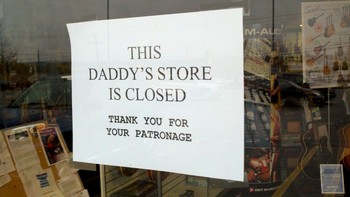
The Daddy’s Junkie Music Store in Salem, NH has closed its doors, along with the rest of the chain’s operation. So far, Daddy’s has not filed for bankruptcy.

This marks the second time this week that a chain store operation has closed a store in the Merrimack Valley without also filing for bankruptcy.

Daddy’s has reportedly closed all its retail operations, and laid off all employees. Well known to musicians in the Northeast, the store was hit hard by a combination of the recession and a dispute with management over compensation that cost the owners at least $600,000.

Typically, store closings in the Merrimack Valley ARE tied to bankruptcy filings, making Lowe’s and Daddy’s something of an anomaly. The bankruptcy case makes it possible for the store chain to shed itself of unwanted lease obligations for the shuttered locations.


By Doug Beaton

Posted in Bankruptcy News | Comments closed

Lowe’s closes Haverhill Big-box store without a bankruptcy filing

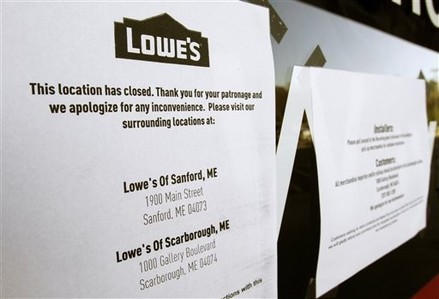
Today brings the news that the Lowe’s home improvement store chain has closed it’s Haverhill store. What is a little unusual is that Lowe’s has not also filed a bankruptcy petition in association with the closing.

In fact, the big-box chain is flush with cash.

But that doesn’t mean there won’t be any personal bankruptcies in Haverhill arising from the closing, because over 100 employees were given pink slips.

Lowe’s also closed three stores in New Hampshire (although the Salem store on the Methuen line at Route 28 remains open), and more around the country.

When you hear of a chain store closing, there often is a bankruptcy case associated with it, because the bankruptcy code allows debtors to break leases as part of the case. Store leases are often long-term, so getting out of them is worth a lot to strapped retailers.

Similarly, the bankruptcy code allows individual debtors the chance to get out of their auto and apartment leases if they file for personal bankruptcy.


By Doug Beaton

Posted in Bankruptcy News | Comments closed

Directions to bankruptcy hearings for clients from Lawrence, Methuen, Andover and Haverhill

The meeting of creditors for bankruptcy debtors who live in Lawrence, Andover, North Andover, Methuen and Haverhill are held at 446 Main Street in Worcester, Massachusetts. Here are driving directions from the Merrimack Valley area:

From the Lawrence area, take I-495 South to I-290;
Take I-290 West to Exit 16 (MLK Jr Blvd) in Worcester;

At the end of the exit ramp, turn right at “99″ restaurant;
Follow this road (East Central Street) past the DCU Center until
it ends at Main Street.

Go left on Main Street; then straight through downtown Worcester
for several blocks;

The trustee’s office (No. 446) is on the right in a large office
tower opposite City Hall (there is a Sovereign Bank in the front
of the building);

Parking meters are available on Main Street and side streets;
parking garages are in the area. There is a parking garage on
Pleasant Street that connects directly to the building. Ignore
the signs for COURT PARKING – you are going to an office
building, not the court house!


By Doug Beaton

Posted in Practical tips | Comments closed

Benefits of Bankruptcy: How Bankruptcy can Help You

Bankruptcy is often viewed as a very negative thing, even a punishment, by many people. It is true that filing for bankruptcy does have some disadvantages. At the same time, it also has a surprising number of benefits, which largely outweigh the disadvantage that go along with filing. Examples of the benefits to be gained from bankruptcy include:

Discharging your debt – Once you have completed your bankruptcy proceedings, whether it be for Chapter 7 or Chapter 13, you will have erased most if not all of your outstanding debt. In being debt-free, you can start your life over in much better financial circumstances.
Relief from your creditors – If you have a substantial debt load, chances are you are being harassed or relentlessly pursued by creditors. Bankruptcy stops this harassment in its tracks, as your creditors must communicate through a bankruptcy liaison once the process has begun.
Financial clean slate – Though you will have a bankruptcy on your credit history, you will essentially have a clean slate once your proceedings have ended. Likely you will have limited access to credit right away, and in time your ability to obtain a credit card or loan will return fully.
Beaton Law Office is well versed in all aspects of the bankruptcy process, and we are available to provide you with comprehensive information if you are considering filing. Should you decide to proceed, we will guide you step-by-step toward completion, and ensure that you have the best possible chance of a successful outcome. Contact a Merrimack Valley bankruptcy attorney at our firm for the help you need to get your life back on track.

Bankruptcy can be immensely helpful, but it is not a particularly easy or quick process if you are attempting to file on your own. That is why it is recommended that you retain the help of an experienced attorney, who can help you avoid the pitfalls that many people encounter in their bankruptcies, and ensure that you are choosing the bankruptcy method that is right for you.

Bankruptcy can be an effective method for ridding yourself of the debt that is causing you considerable financial struggle. Contact a Massachusetts bankruptcy lawyer for further information that will assist you in making a decision about filing.


By Doug Beaton

Posted in Practical tips | Comments closed

A bankruptcy timeline for Massachusetts or New Hampshire debtors

The Bankruptcy Process Follows a Typical Timeline:

Questions about how the process works, what the steps are, and what the timeframes are tend to be very common. Don’t worry, I have compiled the following information to answer these questions and help you understand the basics.

CREDIT COUNSELING BRIEFING:

An individual cannot file Chapter 7 or 13 unless he or she has received individual or group credit counseling during the 180-day period preceding the date of filing of the petition. You can obtain the counseling at www.cricketdebt.com. However, there are many other companies that provide this service on the internet or over the telephone as well. Prices typically range from $35 – $50 per couple.

The purpose of the briefing is to outline the opportunities for available credit counseling and assist the individual in performing a related budget analysis. This briefing takes place over the phone or internet and is typically accomplished in less than an hour.

MEDIAN INCOME

If the debtor’s “current monthly income” is less than the median income for the debtor’s home state, then the debtor will likely be able to file for bankruptcy. “Current monthly income” is defined as the debtors’ average monthly income from all sources derived during the 6-month period preceding the date of determination. The median income depends on the number of household members. The data required to determine the median income applicable to the debtor can be found on the U.S. Trustee’s Means Test Page.

If the debtor’s “current monthly income” is more than the median income, then the debtor is subject to means testing.

THE MEANS TEST

The Means Test is performed by reducing the debtor’s current monthly income by his or her expenses, then multiplying the difference by 60. The result will determine whether the debtor can file Chapter 7, or whether a Chapter 13 will be necessary.

The debtor’s allowable monthly expenses are governed by the IRS and fall into different categories depending on the type of expense:

IRS National Expense Categories. Expense amounts for the categories below will be taken from National Expense Categories a single table maintained by IRS for all states. [§707(b)(2)(A)(ii) (I) & (II)]

Apparel and services. Includes shoes and clothing, laundry and dry cleaning, and shoe repair.
Food. Includes all meals, home or away.
Housekeeping supplies. Includes laundry and cleaning supplies; postage and stationary; other household products: cleansing and toilet tissue, paper towels and napkins, lawn and garden supplies, and miscellaneous household supplies.
Miscellaneous. A discretionary allowance.
Food & clothing expenses may be increased by 5% above the allowance when “reasonable & necessary.”

IRS Local Standard Expenses. Expense amounts for the categories below will be taken from the IRS Local Standard Expenses table, based upon the county in which the debtor resides. [§707(b)(2)(A)(ii) (I) & (II)]

Utilities. Includes gas, electricity, water, fuel oil, coal, bottled gas, trash and garbage collection, wood and other fuels, septic cleaning, and telephone.
Housing. Usually, only expenses for the place of residence are considered to be necessary. Housing expenses include: mortgage or rent, property taxes, interest, parking, necessary maintenance and repair, homeowner’s or renter’s insurance, homeowner dues and condominium fees.
Transportation. Vehicle insurance, vehicle payment (lease or purchase), maintenance, fuel, state and local registration, required vehicle inspection, parking fees, tolls, driver’s license, public transportation. Transportation costs not required to produce income or ensure health and welfare are not necessary.
Assuming the debtor passes the Means Test, and his/her income and expense analysis is ok, we then proceed with filing the case.

THE MEETING OF CREDITORS (Sometimes referred to as the 341 Hearing):
The Meeting of Creditors typically takes place approximately 30 days after the case is filed. I will notify you of the date once it is scheduled, which usually happens the day after the case is filed. While it is called the “Meeting of Creditors”, creditors rarely show up at these meetings. It is really just a meeting with the Trustee which is required by the bankruptcy code. The Trustee’s job is to examine you under oath and make sure you have listed everything in your papers accurately and they may have a few questions for you about your income or assets. These meetings are usually very brief and typically take approximately 5-10 minutes. However, in cases where the debtor runs his or her own business, the trustee may have a few extra questions about the business income and assets.

DEBTOR EDUCATION/FINANCIAL MANAGEMENT COURSE

In addition to the Credit Counseling Course, Debtors have 45 days from the first date set for their Meeting of Creditors to complete the course and have the Certificate of Completion filed with the court. Again, this course can be completed over the internet at a variety of places, including www.cricketdebt.com.

DISCHARGE

60 days after the Meeting of Creditors, if no creditors have objected to the discharge, the court will proceed with entering the Discharge Order. This can take a couple of weeks, but the whole process for a Chapter 7 bankruptcy typically takes about 3-4 months from filing to discharge. The Discharge Order is powerful and prevents creditors whose debts were discharged from ever even attempting to collect on the debt again.


By Doug Beaton

Posted in Practical tips | Comments closed
Call now: (978) 975 - 2608