The myth of the $399 Massachusetts bankruptcy attorney fee

Pick up a copy of the Boston Herald and way in the back with the sports pages and classifieds, you are bound to find several advertisements from attorneys or law firms advertising bankruptcy services from $399, $499, or maybe even $299. Is this real? Can you believe it? Is it just too good to be true?

But if you examine the fee disclosures of these attorneys for cases actually filed with the bankruptcy court, non of them are ever for $399. There are a few reasons why the advertised rate is just a myth:

* The old bait and switch — Not limited to just furniture stores or car dealers, this is where you arrive at the point of sale — here, a lawyer’s office — only to be pressured in to buying something else. Maybe you’d like a little “debt relief” instead of straight bankruptcy, perhaps? At these offices, no one ever gets to file a $399 bankruptcy, but hey, it did get you to show up at the office, right?

* The minimum fee is just an add-on — Here the attorney may try to get you to start with a more expensive procedure before resorting to bankruptcy. You may be “sold” on hiring him to “do” a loan modification, although the attorney knows full well that nearly all applicants are denied. After spending thousands on the modification process, bankruptcy becomes the only remaining option, and you are “relieved” when your aggressive advocate does the case for “only” $399. By comparison, it doesn’t seem that bad, right?

* The fee is only for a skeleton filing — the bankruptcy courts allow for emergency filings, which are intended for people facing imminent actions like foreclosures. They require a minimum of paperwork to start — typically just you name and address, a list of creditors, and a credit counseling certificate, and are sometimes knicnamed “skeleton” cases. The catch here is that the remainder of the paperwork is due in a couple of weeks — and it’s not included in the “introductory” fee. So you either pay more or have your case dismissed — with a bankruptcy filing still on your credit record.

The fact of the matter is you only get what you pay for, and $399 cannot pay for an ethical Massachusetts bankruptcy attorney. If an attorney cuts a corner here, where else is it going to happen?

If you are in Massachusetts, and are looking for an ethical bankruptcy attorney who will charge you a flat rate without playing games, give me call. The number is 978-975-2608. My bankruptcy office is conveniently located on Route 114 in North Andover, and is a short drive from Lawrence, Methuen, and Haverhill.


By Doug Beaton; art work by Matthew Cheyne; see more at www.matthewcheyne.com .

Posted in Practical tips | Comments closed

Recovering from a bankruptcy by delaying gratification

It’s August 1st, and just about every bankruptcy blog in the nation is fixated on the latest news regarding the debt ceiling and the proposed compromise bill now before Congress, so I thought it would be better to tread a little different ground.

Just for the record though, the United States as a whole can’t file for bankruptcy. Local governments can, and at this writing Jefferson County, Alabama (encompassing Birmingham) is considering it.

If governments are struggling so mightily to pay thier bills, how in the world can an ordinary individual cope? And if you have to file a bankruptcy case to get back on an even footing, how do you prevent yourself from going down the wrong road again?

Tracy at MoneyNING has an excellent post on ten ways to delay gratification so that you end up saving more and cultivating the ability to meet your needs. My favorite is number four — make spending money as cumbersome as possible. This echos a post I wrote last week on the perils of electronic banking. Simply put, the idea is that letting a bank or cresdit card company keep all your accounts for you makes it far too easy to spend money.

As Tracy puts it, “he problem with paying with plastic for many of us is that it just doesn’t seem real enough. Paying with cash can make you think twice and reconsider how much of a need this purchase is.”

Tracy advises putting your savings into a special account just for that purpose, and “making it difficult” to withdraw the funds for special purposes. In other words, no electronic banking!

Follow her advice, stay disciplined, and you will be back on your feet after a bankruptcy a lot quicker than you expected!


By Doug Beaton

Posted in Practical tips | Comments closed

Attorney general enters the debate over MERS; efforts may help bankrupt homeowners

The Boston Globe recently reported that Massachusetts Attorney General Martha Coakley is not backing off her invetigation into the practices of the Mortgage Electronic Registration System known as MERS.

Recently, a Massachusetts bankruptcy judge found no fault in the use of MERS to record mortages in dummy names at the registry of deeds statewide and through the nation.

Coakley, as well as many Massachusetts bankruptcy and real estate lawyers, is skeptical of the companies practices, which affects up to 60 percent of mortgages and refinancings. MERS holds legal title to particular mortgages, and records the documents at the registries. Once recorded, swapping and selling of mortgages goes on behind the scenes, sight unseen. The frantic selling and re-selling of mortgages is often listed as one factor in the housing crisis.

According to the Globe, John L. O’Brien, register of deeds for the Southern Essex District Registry of Deeds in Salem, called his office a “crime scene’’ after releasing an audit alleging that hundreds of mortgage-related documents were invalid or fraudulent.

Last year, O’ Brien asked Coakley to investigate MERS, saying that the company owes Essex County more than $22 million because it failed to record mortgage transfers locally, thus bypassing a $75 fee per transaction.

Bankruptcy judge Melvin Hoffman, however, ruled in June that the use of MERS to hide the names of actual mortgage holders was legal under present state law.

Resolution of these issues could be coming to loggerheads soon, affecting all Massachusetts homeowners in a foreclosure or bankruptcy situation.


By Doug Beaton

Posted in Foreclosure, Real estate, Secured loans | Comments closed

A potential advantage to Chapter 13 bankruptcy

One difference between filing for bankruptcy under Chapter 7 and filing under Chapter 13 concerns how the means test for the different chapters treat contributions to retirement accounts such as 401(k) and IRA plans.

In Chapter 7, any contributions you make are ignored.

However, in Chapter 13, contributions to a retirement plan can reduce the amount that you have to make for your plan payment to the trustee. For example, if the chapter 13 means test indicated that you should make a $1000 per month payment to your creditors through your plan, but you contribute $600 per month to a 401(k) at work, your plan payment only has to be $400!

In this way, you can save for retirement while completing a chapter 13 plan (which takes from 3 to 5 years to finish), and you will essentially be paying yourself and preparing for your future, instead of tossing that money to creditors


By Doug Beaton

Posted in Chapter 13 | Comments closed

Could electronic banking lead you to bankruptcy?

With the increasing advent of electronic banking options, and cards of all kinds, can you really keep up with it all anymore. More importantly, could the proliferation of debit and credit options actually dive comsumers closer to bankruptcy?

I think so. In the days when people reconciled their statements, and debited their own accounts with a pencil and paper checkbook register, they had a more initimate connection with thier money, and certainly there was no temptation to “take an extra $20 cashback” at every transaction.

There is, of course no real obstacle to anyone keeping their records the old fashioned way, but with all honesty, the allure of techno whiz-bang stuff is to great for most of us.

But those who take the time to balance accounts with pencil and paper may ultimately have an advantage — they will have emotional control over their money, and therefore a huge advantage in avoiding bankruptcy (or successfully rebuilding from one).


By Doug Beaton

Posted in Real estate | Comments closed

In bankruptcy, auto leases do not need to be reaffirmed

A few years ago, the bankruptcy code was amended to “encourage” debtors to reaffirm thier auto and truck loans; if no reaffirmation agreement was signed within a specified time after filing the bankruptcy case, lenders got back their repossession rights without having to go to court and ask permission.

But what happens if you lease your vehicle, instead of owning it? A recent string of court decisions indicates that leases do not have to be reaffirmed, as there is no real meaning to the idea of ‘reaffirming” under the bankruptcy code.

Leases, instead, are either assumed or rejected in bankruptcy. And at least for Massachusetts bankruptcy debtors, there is good case law that suggests that even assuming a car lease does not re-create a personal liablility to pay following the bankruptcy.

The bottom line for drivers of leased vehicles in Massachusetts: if you want to keep your leased vehicle after filing, assume the lease and keep making payments. But do not be coerced in signing a reaffirmation. And if you want to turn the vehicle in, instead, you can do that too.


By Doug Beaton

Posted in Secured loans | Comments closed

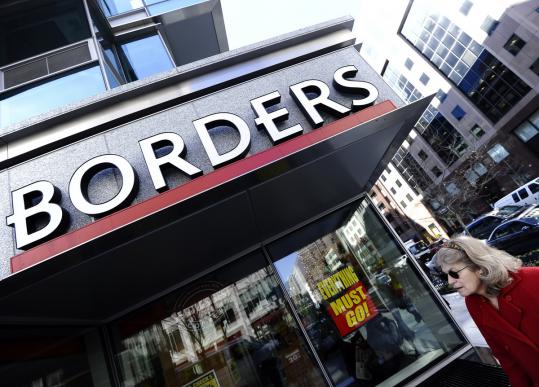
Borders bankruptcy liquidation could start as early as Friday in Methuen

Just a quick update: the Borders bankruptcy liquidation sales could start as early as Friday July 22 at the remaining stores in the Methuen Loop, and the Borders Express in Salem, NH.

The Boston Globe has an excellent article on one of the factors that did in the chain bookstore: excessive browsing. Many folks used the Boston store as their own library, skimming works at lunch and buying them later on Amazon. I would add another factor: failure to have an entry in the e-reader competition, which would have captured at least some of those lost sales.

A Boston stock broker browsing the  store, who buys one book a month, wasn’t surprised the chain is shutting down.

“I kind of saw the writing on the wall,’’ he said. “The Internet is killing the business.’’


By Doug Beaton

Posted in Bankruptcy News | Comments closed

Ways that you can’t pay a bankruptcy lawyer

It’s not financially easy for many people to hire a bankruptcy attorney, and they might try to think up some “creative” ways to swing the deal.

Here’s one that won’t work: giving your lawyer a series of post-dated checks, intending him to cash them at various points AFTER the case is filed.

It’s a little hard to believe that any attorney would even agree to this, but apparently some of them do. But just in case any more are tempted, a judge in Tampa has issued an opinion ending the practice. In essence, the judge said that the clients were creating pre-petition debts to their attaorney that could be discharged with the case.

California bankruptcy guru Cathy Moran points out that the post-dated check method also doesn’t fly in the Ninth Circuit, which covers most of the western states.

Here in Massachusetts, its very common for the chapter 7 trustees to “remind” bankruptcy debtors right at the meeting of creditors that they have a right to discharge unpaid fees to thier own bankruptcy lawyers. This makes for some intersting hearings, you can be sure!


By Doug Beaton

Posted in Practical tips | Comments closed

Borders inches closer to bankruptcy liquidation of Methuen and Salem stores

The Borders bookstore chain got a lot closer to bankruptcy liquidation over the weekend, as no bidders emerged by the bankruptcy court’s deadline.

This probably means the eventual shuttering of the Methuen store at the Loop, and the mini-outlet in the Mall at Rockingham Park in Salem, N.H., due to the bankruptcy. There could be some big sales there soon, but I’ll be sad to see them go.

Last minute negotiations with the Alabama based Books-A-Million chain apparently fell through late Sunday.


By Doug Beaton

Posted in Bankruptcy News | Comments closed

Last call for bankrupt Borders stores in Methuen, Salem, NH

If you would like to see the bankrupt Borders bookstores in Methuen and Salem, N.H. remain open, you better put a bid in on them before Sunday night.

As of now, it looks like the whole chain might be headed to a Chapter 7 liquidation sale, which would eventually close the Methuen and Salem stores along with all the others. After Borders filed bankruptcy the Methuen and Salem locations remained open and largely unaffected. That’s no longer true.

On Wednesday, creditors objected to a plan by private investor Najafi Company, which would have allowed for the chain to continue operations. The private equity group has since withdrawn its bid. That leaves only a “stalking horse” bid by a liquidation company.

Unless another bid shows up by 5 PM Sunday evening, the Borders bookstore chain looks like it will be headed for a Chapter 7 liquidation.


By Doug Beaton

Posted in Bankruptcy News, Chapter 7 | Comments closed
Call now: (978) 975 - 2608