Massachusetts bankruptcy exemptions kind to animals

After the holiday weekend, in a bit of a light mood, I thought I would take a look at some of the more obscure items on the list of Massachusetts bankruptcy exemptions.

The Massachusetts exemption scheme is reasonably kind to small farmers, allowing them to keep post-bankruptcy, “two cows, 12 sheep, 2 swine and 4 tons of hay.”

Debtors in Massachusetts may also keep “one pew occupied by the debtor or the debtor’s family in a house of public worship,” and “one sewing machine in actual use by each debtor or by his family, not exceeding $300 each in resale value.”

Of course most of these exemptions are relics of the state’s agrarian (and Puritan) past, and are seldom used by modern bankruptcy lawyers. The laws are simply kept on the books year after year, for while they offer most little help, they also do no harm.

Fishermen fare slightly better under the revised Massachusetts exemptions, which went into effect on April 7th: “boats, fishing tackle and nets of a debtor who is a fisherman and actually used by the debtor in the course of the debtor’s business, not exceeding $1,500 in value,” are exempt in a Massachusetts bankruptcy case. But this one, instead of being antiquated, may not actually be enough to protect most modern commercial fishing operations.


By Doug Beaton

Posted in Exemptions, Just for fun | Comments closed

Bankrupt Blockbuster still may close more stores; Lawrence store open for now

The bankruptcy court sale of the Blockbuster video store chain to satellite purveyor DISH TV is on temporary hold, so that the buyer can have some more time to decide what store leases it wishes to renew, and which ones it wants to abandon, according to wire service reports.

Dish’s $320 million offer to buy all of the Dallas-based chain’s assets was declared the highest and best offer after an auction April 6. Blockbuster filed for bankruptcy last September.

While the North Andover Blockbuster on Route 114 next to the Vineyard has been closed for about a month due to the bankruptcy, a sister store just a few miles north on 114 in Lawrence near the C1 Buffet remains open; I was in there just two days ago, and they are very much in business and have a good selection of the latest releases.

Photo by Reuters


By Doug Beaton

Posted in Bankruptcy News | Comments closed

Introducing the Massachusetts bankruptcy wild-card exemptions

With the change in Massachusetts state law that went into effect earlier in April, Massachusetts residents have a few new arrows in their quiver if they need to go to bankruptcy court.

One of the most important of these is that Massachusetts now has a “wild-card” exemption, just like federal law (and New Hampshire law, too) does.

The significance of the wild card is that it allows debtors to exempt property — any type of property whatsoever — over and above what the rest of the Massachusetts laws allow for.

So if you are using the Massachusetts exemptions when filing your bankruptcy case, and you own something that isn’t specifically provided for by the Massachusetts exemption scheme, you can now declare it exempt anyway.

Or if you have “too much” of anyone thing, for example, $3,000 in checking account, where only $2,500 is protected by the bank account exemption, you can use $500 of your wild card allotment to protect the remainder of your checking balance. Wild, huh?

And what is the wild-card allotment? Well it can reach as high as $6,000, and is at least $1,000 for each individual filer. or to put it more technically, everyone gets the first $1,000 and then you can also apply up to $5000 of any unused furniture, automobile, or business equipment exemptions.

If you are in Massachusetts and are in the market for a bankruptcy lawyer to help you figure all this out, give me a call; initial consultations are free of charge.


By Doug Beaton

Posted in Bankruptcy News, Exemptions | Comments closed

I filed for bankruptcy, now where’s my *?!*%$# mortgage statements

Let’s imagine you own a home, but have just filed for bankruptcy because of astronomical credit card or medical debts that got out of control. But you were always sure to pay the mortgage first each month (a smart move, by the way) so you would be sure of a roof over your head.

Now its the first of the month after you filed your bankruptcy case, and you notice that although you are ready to make the mortgage payment again, apparently you bank isn’t. They haven’t sent you a statement. What’s going on here?

Well, first off, it doesn’t mean you got a free house — bankruptcy just doesn’t work the same way with secured debts like a mortgage or car loan as it does with unsecured credit card bills. But you probably guessed that already, and you want to make the payment, after all.

It also doesn’t mean that foreclosure and eviction is imminent, either. While you are in bankruptcy, lenders have to go to the bankruptcy judge for permission to start a foreclosure, and they can’t do that without letting your bankruptcy attorney know about it.

According to the lender’s way of thinking, statements are cut off when you file because they don’t want to be seen as sending you a bill for a debt that you do intend to discharge, therefore violating the automatic stay which protects debtors from harassment while their cases are pending in the bankruptcy court.

Of course, if you do want to pay the bill, and you aren’t planning to discharge the mortgage, the lack of a statement can be annoying and inconvenient. It shouldn’t have to be. In fact, if you live in Massachusetts, there is a bankruptcy court rule that allows lenders to send out routine statements without fear of retaliation. it might be a good idea to remind the bank of this. In most cases, a phone call to the lender should take care of the problem (if you can get through to a live person, but that’s another story).

And watch out for banks who have a more devious motive for now sending out statements: to hope you “forget” about the account and fall behind, or to try to pressure you into signing a reaffirmation agreement, which often isn’t necessary if you are completely caught up on the mortgage.


By Doug Beaton

Posted in Practical tips, Real estate | Comments closed

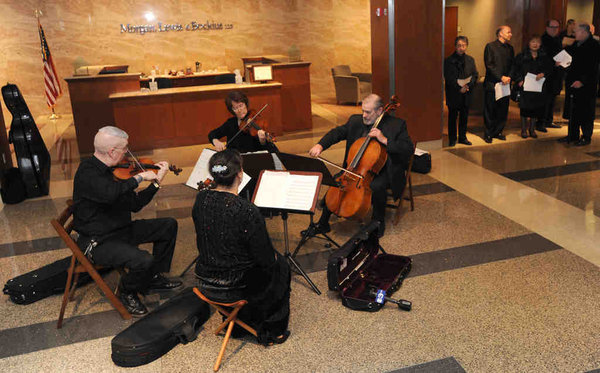
Orchestra to file for bankruptcy

Last year, these pages adopted major league baseball’s Texas Rangers, who filed for bankruptcy in mid-summer and went on to win the American League pennant, as a tangible symbol that the bankruptcy process really represents a beginning, as well as an end.

I think this year’s bankruptcy poster children will be the players of the Philadelphia Orchestra, whose board voted last weekend to authorize a bankruptcy filing to protect the ensemble’s endowment. The appears to be the first major bankruptcy case in the fine arts world related to the recent “Great Recession.”

Although the move apparently has worried some of the musicians, the bankruptcy will not disrupt any of the Orchestra’s operations, specifically their remaining concert dates. Or as they put it in a press release, “the music plays on.”

With that spirit, lets give our approval to this Chapter 11 case, and hope that the “solid gold Cadillac of orchestras” returns to financial stability quickly.

In the meantime, enjoy some of their uplifting sounds: Philadelphia Orchestra performs in Vail

If you wish, you can text “POGIVE” to 27722 to make a $5 donation through your mobile phone.


By Doug Beaton

Posted in Bankruptcy News | Comments closed

Hidden benefits to filing for bankruptcy

Not many people would file for personal bankruptcy unless it was advantageous to do so. As a matter of fact, one of the best reasons to talk to a bankruptcy attorney before you file is just that — to see if bankruptcy is in fact in your best interest.

For most folks, especially those with high-interest credit card debts, there are some obvious advantages. But there are also some less obvious advantages as well — call them pleasant side effects, if you will.

Among the obvious bankruptcy advantages, your bills will either go away, or be controlled by a Chapter 13 plan. For most filers, credit card and medical debts are simply eliminated. Also, creditors stop calling, writing, and suing you — its part of the law. This gives you a fresh start, a financial do-over where you don’t start each month behind the eight-ball.

But you also get some unintended benefits when you file. Consider:

* Your positive outlook on life is restored. You get your pride back. If you walk around worrying about the mortgage or the car payment constantly it is tough on your self-esteem and can get pretty depressing. Once you file bankruptcy, however, those feelings will stop.

* Strange but true — your credit score will improve. The biggest effect on your credit score is late payments. A bankruptcy won’t help your score immediately, but since the bills that weren’t getting paid will be gone, you can rebuild your credit, usually in about a year.

* Your whole life comes back. Money problems are often damaging to your home life and relationships. When you and your spouse do nothing but worry about where the rent is coming from, you can get easily irritated and start fighting. With the source of the trouble removed, tenseness and bickering becomes a thing of the past.

If you’re having trouble meeting your obligations, talk to a experienced local bankruptcy attorney. It might just what you need to turn your life around.


By Doug Beaton

Posted in Practical tips | Comments closed

Beware increased debt load six months prior to bankruptcy

Significant increases in credit card debt within six months of a bankruptcy filing is often treated as a red flag by the bankruptcy trustees who are charged with policing the system. That does not mean that you cannot use a credit card for six months before you file. It means that large charges or a substantial increase in credit within the prior six months could draw scrutiny.

In a perfect world, trustees would be able to sort out acceptable reasons for the increased debt from fraudulent ones. People who after they see bankruptcy as a good option intentionally run up credit cards to buy things they want but do not need are trying to take advantage of their creditors and the bankruptcy system; there is no problem with trustees coming down hard of this type of debtor abuse.

On the other hand there are folks who file bankruptcy reluctantly after a financial setback such as a job loss, pay decrease, or unexpected large debt. These people will use credit cards to buy necessities because they hope that their fortunes will improve and they can avoid bankruptcy. These individuals should not be penalized for increasing debts.

But even those with acceptable motives are taking a risk when they borrow in order to buy time to work out of their financial situation. If they are unable to increase income, or decrease expenses, these well-intentioned debtors may still have recent debts challenged in Chapter 7 bankruptcy.

In order to avoid problems at the meeting of creditors, advance planning with a bankruptcy lawyer is important. If you are in the Merrimack Valley and are looking for bankruptcy assistance with credit card or other debts, feel free to give me a call.


By Doug Beaton

Posted in Practical tips | Comments closed

Banks ordered to pay for bad foreclosures

The federal government has ordered sixteen large mortgage lenders, including the nations four biggest banks (Citibank, Chase, Wells Fargo, and Bank of America) to reimburse some homeowners who were improperly foreclosed upon since the recession began in 2007.

The list also includes lenders active in the Lawrence, Haverhill, and southern New Hampshire markets such as Sovereign Bank and Ally Financial.

Commenting on the announcement, John Taylor, chief executive of a consumer housing watchdog group, said “There are so many people who, if they had received a meaningful modification, could have stayed in their homes.” For the past several years, consumer bankruptcy attorneys have been pushing to get Congress to allow the bankruptcy courts to enforce mortgage modifications, but legislators have refused to budge (see this post).

Taylor also said the government’s action does little to help those who are just now wrestling with a foreclosure and those who have already been displaced, he said. Rather than moving swiftly to seize people’s homes, the banks should have done a better job helping people lower their mortgage payments through modification programs, he said.

In Washington, House Democrats introduced legislation yesterday that would require lenders to perform a series of steps, including an appeals process, before starting foreclosures.

That is all well and good, but does little to help people who have already fallen behind. In order to get the housing crisis under control as fast as possible, it’s time to allow debtors to go to bankruptcy court to modify the balance of their mortgage as well as their monthly payments through a Chapter 13 bankruptcy plan.


By Doug Beaton

Posted in Foreclosure | Comments closed

Confusion reigns on whether a means test is needed when converting a bankruptcy case to Chapter 7

If you file a Chapter 7 bankruptcy case, debtors with mainly consumer debts have to also file a “means test,” which proves they qualify for Chapter 7 relief based on their recent income.

If you file Chapter 13 case, there is no pure means test (although there are qualifications), but you file a very similar form that determines your minimum monthly plan payment.

So what happens if you file a Chapter 13 case and then convert it to Chapter 7 at a later date? is the means test required, or is it excused?

Well, there is no one answer; this is a question that has vexed the bankruptcy judges since the bankruptcy code was modified in 2005, and court have issued conflicting opinions using a variety of reasoning tactics.

There is at least one Massachusetts bankruptcy court opinion (which I wrote about in 2010) that suggests the answer is “no,” that no means test is required for converted cases. But next door in neighboring Rhode Island, a judge concluded just the opposite.

Out in the Midwest, there has been a mini-trend toward “no” for an answer, with judges in both Minnesota and Iowa coming to that conclusion.

But that changed last month when those cases went up on appeal, and a panel of judges from the Eighth Circuit appeals court reversed the decisions. In the Chapman and Cruse cases, the Eighth Circuit, based in Chicago and covering parts of the upper Midwest, imposed a means test on converted cases after all.

The Eighth Circuit’s opinion is not binding on bankruptcy debtors in either Massachusetts or New Hampshire, but it may represent a counter-trend away from the free pass that converted cases sometimes got, as this appears to be the first time an appellate court has dealt with the issue. In any event, it is an issue that bears watching, and one that may someday have to be decided by the United States Supreme Court.


By Doug Beaton

Posted in Chapter 13, Chapter 7, The Bankruptcy Code | Comments closed

The Squeeze: People are having trouble paying for food, oil, and credit cards all at once

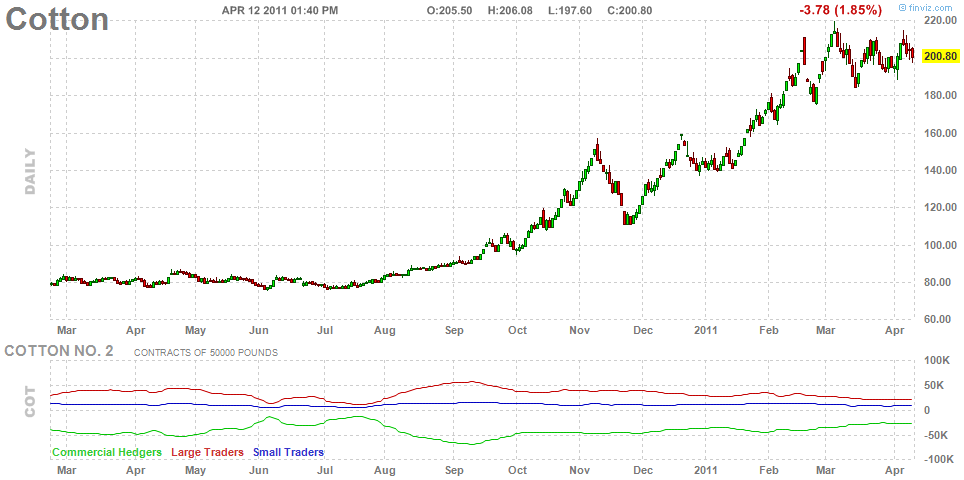
We were having a little bit of an economic recovery the past few months, which, needless to say, was badly needed. But now rapidly rising consumer prices are threatening the fragile recovery.

As a result, a lot of people in our Merrimack Valley area are being put through what I call “the squeeze.” When they try to pay for their food, heat, gas, clothes, etc., all their income gets used up, and the credit card bills just add the final coup de grace.

Take for instance the price of corn (which is a good proxy for food in general). Here is a chart of corn prices for the past few months:

Then there is cotton, a key part of the clothing we need. It’s been on an upward climb, too:

Here is the chart for heating oil:

I’ll spare you the one for gasoline — you don’t need it, everyone knows what is happening at the pumps just since the beginning of the year.

Can bankruptcy fix these problems? In a word, no, not for one individual or for the American economy as a whole. But it can deal with the other monster under the bed — credit card debt. if you are caught in the squeeze, and credit card debt is part of the problem, a Chapter 7 case may be a tremendous benefit to help you survive until times truly do improve.


By Doug Beaton

Posted in Credit cards | Comments closed
Call now: (978) 975 - 2608