Using credit cards for cabs?

According to the Boston Globe, more than 1 of every 4 Boston taxi passengers now pays by credit card, an option that has made cabs more attractive to riders but provoked tension among drivers, passengers, and city regulators.

What’s got the cab drivers riled up is the combination of fees that they are charged for each credit card transaction, plus another fee to withdraw their earnings from an account. Between the two fees, a twelve hour shift may not equate to even minimum wage after all their expenses are paid.

But when I saw the article, I was thinking more from the passenger’s perspective. As a bankruptcy attorney, I was amazed so many people are using cards to pay for a routine service like a cab ride. I know these cards are most likely not paid off in full every month meaning high interest gets applied to the already high cab meter rates. It is just this kind of here-and-there impulsive spending that often adds up to a bankruptcy in the long run. I don’t think credit cards belong in cabs; pay cash or walk or take a bus!


By Doug Beaton

Posted in Credit cards | Comments closed

Lenny Dykstra charged with fraud in his bankruptcy case

Last summer brought us an uplifting baseball related bankruptcy story, with the Texas Rangers sold in a bankruptcy court auction to a new group of owners who led the team to their first pennant winning season later that same year.

This season the baseball connection to bankruptcy court is decidedly more of a downer, with former Met and Phillies star Lenny “Nails” Dykstra being accused of bankruptcy fraud.

Dykstra filed for Chapter 11 bankruptcy in 2009, and the case was later converted to a Chapter 7 liquidation. Last week, a federal grand jury returned an indictment formally charging him with several acts of bankruptcy fraud. The essence of the charges in that Dykstra removed many items from his mansion in Thousand Oaks, California, including chandeliers and gold fixtures, and then lied to the bankruptcy trustee about stripping the home.

The bankruptcy trustee has estimated that the stolen property was worth more than $400,000. n bankruptcy filings, Dykstra listed assets of $24.6 million and debt of $37.1 million. His debt includes $12.9 million owed to JPMorgan Chase & Co. Following his retirement from baseball, Dykstra tried to become something of a financial guru, often selling day trading tips on-line and on late night television ads.

In Massachusetts, he is best remembered as a member of the New York Mets squad that defeated the Boston Red Sox in the stunning seven game World Series in 1986.


By Doug Beaton

Posted in Bankruptcy News | Comments closed

Seven key facts about Chapter 7 bankruptcy

Confused about the different “chapters” of the bankruptcy code? Here’s a very quick cheat sheet on Chapter 7, which is what the majority of people file.

It’s a quick proceeding — by lawyer’s standards anyway — typically over and done in four months or less.

If your family income is under the state average for either Massachusetts or New Hampshire (taking into account family size) you automatically qualify.

if your income is above the state average, you might still qualify, but you will need to “pass” a fairly elaborate financial “means test.” (Time to call a bankruptcy lawyer!).

There are no monthly trustee payments with a Chapter 7 filing.

You can keep all of your exempt property in Chapter 7 — which for most people, but not all, means everything. (Time to call that lawyer again!).

You can keep your house and car as long as you are caught up on those loans. Alternatively, you can rid yourself of an unwanted, burdensome house or car if you prefer. Debtor’s choice.

Just like the other chapters, creditors are forbidden from calling writing and suing Chapter 7 debtors. The benefit is immediate — its starts the day your case is filed


By Doug Beaton

Posted in Chapter 7 | Comments closed

Inspiration for the newly bankrupt

Bankruptcy offers a fresh start for people mired in a financial mess.

Only sometimes it doesn’t seem that way for those stuck in the middle of it.

For those having a tough time coming to grips with a financial setback despite seeking bankruptcy relief, bankruptcy attorney Rachel Lynn Foley has written a nice article invoking the prophet Isaiah, who promised “a crown of beauty” for grieving souls,” as well as Foley’s own admonition that Every tough situation we face gives us the opportunity to grow and propel us forward.

Attorney Foley’s final points are well worth remembering: “If you are willing to make the tough decisions for the comparative short term you just may rise from the ashes of bankruptcy and receive the beauty of a debt free life.”

Don’t let the bankruptcy process scare you away from a full enjoyment of this short life we have. The process is less intimidating than most people think, and rising above the ashes is a lot closer, too.


By Doug Beaton

Posted in Just for fun, Practical tips | Comments closed

What if the meeting of creditors goes awry?

Most bankruptcy clients worry needlessly about the “meeting of creditors” in their case — that day about a month after filing when they must drive to Boston, Worcester or Manchester to “face the music” about the case.

In almost every instance, this worry is misplaced, as the meeting (which is actually conducted by the bankruptcy trustee and not the creditors) goes off without a hitch and takes about five or ten minutes of routine questions. Sometimes, their attorney (me) is asked to provide more paperwork, which is usually done fast enough by mail or e-mail.

But what if something does go wrong? What if some loose cannon creditor does show up and start incessently grilling you about particular debts?

California bankruptcy attorney Cathy Moran has written a nice article about what she does if this ever happens.

Among her key points: You do have to go through with the meeting anyway, so ther is no point whining about it. On the other hand, everyone deserves to be treated in a business-like fashion, so if the questioning gets abusive, at some point you should expect your attorney (i.e. me) to put a stop to it.

When answering a creditors questions, what you don’t want to do is appear evasive, which might get you an invitation to come back for a continued meeting. Answer the questions as directly as possible.

And remember to only respond to actual questions asked by a creditor. When creditors show up at these hearings without their own attorney, on occaison they have gone on long rants about how awful it is not to get paid. While they may guinuinely feel that way, this is a speech, not a question, and your only obligation is to answer questions. So listen carefully, and consult as ofetn as necessary with your own bankruptcy lawyer sitting beside you.


By Doug Beaton

Posted in Practical tips | Comments closed

On the fence about bankruptcy?

Russell DeMott, a bankruptcy lawyer in South Carolina, has written a good article for the many folks who can’t decide if they want or need to file a bankruptcy case or not. It’s good reading for anyone on the fence in Massachusetts or New Hampshire as well, as these issues are national in scope.

Among attorney DeMotts red-flags: paying credit cards off with retirement accounts or home equity loans, taking or paying loans from relatives, living off of cash advances, staying in an “underwater” home, and transferring property to relatives.

These all have bankruptcy consequences, and its better to know what they are by talking it over with a bankruptcy attorney before they sink you!


By Doug Beaton

Posted in Practical tips | Comments closed

Philly Orchestra remains magnificent despite filing for bankruptcy

The New Yorker has taken notice of the Philadelphia Orchestra’s recent bankruptcy filing, noting in the magazine’s May 2nd edition that “though the board of the Philadelphia Orchestra has decided to declare bankruptcy, the ensemble remains its magnificent self. At Carnegie Hall, Charles Dutoit, its chief conductor, leads its musicians in Stravinsky’s “Oedipus Rex” and “Apollon Musagete.”

I will post reviews when available. Hopefully they will be good. It reminds me of the old joke, “how do you get to Carnegie Hall? Practice, practice, practice!”

Here in North Andover we practice bankruptcy law, building up expertise over the last seventeen years.

Update:Here is the New York Times review of the Philadelphia orchestra’s Carnegie Hall concert. Looks like they pulled it off with flying colors!


Photo: of Charles Dutoit, by New York Times


By Doug Beaton

Posted in Just for fun | Comments closed

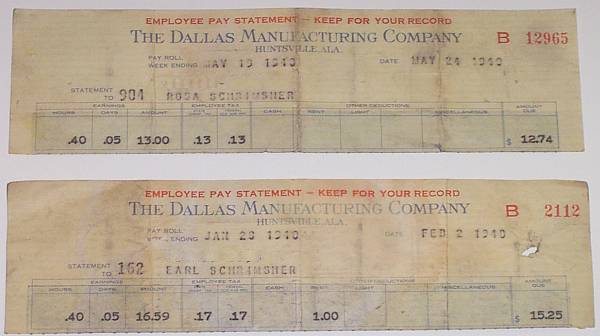
Why so many paystubs?

If you are thinking about consulting with a bankruptcy attorney, be prepared to bring your pay stubs to the consultation. A lot of them.

It’s not uncommon for an attorney to want to review as many as six months worth of your prior pay statements when you visit the office.

Why so many?

It’s all about the means test, which since 2005 requires that you prove your income level in order to file a Chapter 7 bankruptcy case. The pay stubs are used to gauge your income level, and if you are above the state average income for your household size, to get information on payroll deductions that may still qualify you for a Chapter 7 case.

The means test looks back at your last six months of income, so that’s why lawyers want you to dig deep for those statements.

Then there is the recent bankruptcy requirement that your lawyer provide the bankruptcy trustee with all of your pay information for the sixty days prior to filing.

So asking you to cough up pay stubs at an initial consultation is more than just a make-work project for you — its a vital part of giving you the proper advice on whether bankruptcy will even help you at all.


By Doug Beaton

Posted in Practical tips | Comments closed

Bankruptcy after personal injury

If you are expecting (or at least hoping for) a settlement in a personal injury case from a car accident or a slip-and-fall, etc., it won’t always prevent you from filing a bankruptcy case, if you need to do that as well.

The federal bankruptcy exemption list allows you to keep up to $15,000 in settlement funds if a personal injury case is settled after you file for bankruptcy. Keep in mind that this protects the amount that you actually collect, not portions used to pay a personal injury lawyer, or to pay outstanding medical bills.

If your share of the settlement is more than $15,000, the amount above that cap will go to the bankruptcy trustee, and ultimately, your creditors, as partial payment on your debts.


By Doug Beaton

Posted in Exemptions | Comments closed

Disability payments protected in bankruptcy

If you are receiving — or expect to receive in the future, disability benefits, you are not prevented from filing a bankruptcy case.

There are two common sources for disability payments, social security and private insurance companies. Both types are covered by federal bankruptcy exemptions.

The right to receive social security payments is exempt under bankruptcy code section 522 (d) (10) (A), which exempts “The debtor’s right to receive a social security benefit, unemployment compensation, or a local public assistance benefit.” This covers both the old age social security benefits, survivor’s benefits, and SSDI benefits.

As for private disability insurance it is exempt property in a bankruptcy under bankruptcy code section 522 (d) (10) (C), which protects “the debtor’s right to receive a disability, illness, or unemployment benefit.”


By Doug Beaton

Posted in Exemptions | Comments closed
Call now: (978) 975 - 2608