Walking away from a house: not a sure thing?

It’s no surprise that with the economy in the dumper and the housing market at a standstill, more and more people are trying to use bankruptcy as a means to get rid of their house, rather than trying to save it.

From a green-eyeshade point of view, bailing out of a home that is seriously underwater is often a smart thing to do, as California bankruptcy attorney Cathy Moran likes to point out.

But what would happen if the lender refused to take the property back?

Now this happens only rarely, if at all, but it raises a sticky point about the current state of the law: there may not be a way to force a lien holder to take property if they don’t want it. Even under the Bankruptcy Code.

A married couple in Massachusetts got a taste of how this works in a bankruptcy case recently decided by Judge Boroff in Worcester. As part of their Chapter 13 case, the debtors in the Cormier case filed a motion with the judge to force their home mortgage lender, American Home Mortgage Service, Inc., to “hurry up” and foreclose and take possession of the property; the Cormiers were incurring insurance and other ongoing expenses while the case was in progress.

No dice, said the judge, in a long detailed opinion that delves into the fine points of what ownership truly means under both Massachusetts and federal laws. The judge decided that since the mortgage company had already filed with the court a “motion for relief” — the first step in foreclosing on someone who has filed a bankruptcy case — the motion would be allowed, and the debtors would have to see if the house went into foreclosure shortly. if not, perhaps they can come back with an updated argument, but otherwise, the judge was content to let the process play out slowly.

The judge also denied the debtor’s attempt to deduct their insurance costs from their Chapter 13 payments as “administrative expenses,” a category typically used for legal and other professional fees.

The bottom line: while it would be unusual to see a secured creditor refuse to actually take their security back when it is offered to them, it isn’t easy to hurry the procedure up if the creditor appears to be dragging their feet.

Walking away from a house may not be so easy after all!


By Doug Beaton

Posted in Bankruptcy News, Chapter 13, Foreclosure | Comments closed

Bay State bankruptcy filings soar

Bankruptcy is popular in Massachusetts, and getting more so.

According to banking industry consultants the Warren Group, BKs are up 25 % in Massachusetts for the first half of 2010.

“A total of 11,847 filers statewide sought protection under Chapter 7, Chapter 13, and Chapter 11 of the U.S. bankruptcy code in the first two quarters, up from 9,461 a year earlier,” the Warren Group said in a press release that was reported in the Boston Globe. “The number of filings was also 13.7 percent higher than the previous two quarters, when there were 10,419 filings.”

“Bankruptcy filings are considered a lagging indicator, and these bankruptcy filings really reflect earlier economic conditions,” Warren Group chief executive Timothy M. Warren Jr. said in a statement. “Many people struggle to hold on for as long as they can before seeking bankruptcy protection, but even though the economy is recovering, consumers are still hurting and struggling to pay off the debt they’ve accrued over the years.”

Anyone who fits that description — struggling to pay off years of accrued debts — may give me a call and set up a free office consultation. It only takes about 30 minutes, and if it turns out that bankruptcy is the best option, I can do the legal work for one low flat fee — no fine print or endless charges.

And you’ll have plenty of company.


By Doug Beaton

Posted in Bankruptcy News | Comments closed

Massachusetts foreclosure rate called “staggering”

This may be beginning to sound like a broken record, but the foreclosure rate in Massachusetts is way up again — enough so that the leader of the Warren Group that tracks banking news has called the situation “staggering.”

Quoted in the Boston Globe, Timothy M. Warren, Jr. noted that more than 1000 Massachusetts homes have been taken in every month of this year save one.

According to the article, Cambridge lawyer Paul Collier said the continuing flood of foreclosures could further hurt the struggling housing market and indicates that lenders are still balking at helping borrowers to modify their loans.

“As long as we continue to pour thousands of foreclosed homes into the market every month, there will be no recovery,’’ said Collier, who represents clients fighting foreclosures. “Banks are doing nothing to modify and keep people in their homes.’’

The high rate of foreclosures may be an indication that banks are stepping uop their efforts to get bad debt off their books. but that means they are coming down hard on home owners.

Homeowners caught in a foreclosure situation may be able to turn to the bankruptcy code for help. In a best-case situation, debtors who still have income coming in may be able to save their house through a Chapter 13 plan, and might even be able to eliminate home equity loans or second mortgages.

Even in a worst case scenario, bankruptcy has the advantages of buying the debtors some more time in the home, and preventing a bank or collection agency from coming after them for a deficiency balance if the foreclosed property doesn’t fetch enough at auction to pay off the loan.


By Doug Beaton

Posted in Bankruptcy News, Foreclosure | Comments closed

Bankruptcy has a broad definition of what a student loan is

When it comes to student loans and bankruptcy, the news is typically grim all around. Student loans can’t be discharged through a typical Chapter 7 case, unless the debtor can prove they are an “undue hardship.” The procedure for claiming undue hardship involves filing suit against the lender and litigating with them; this will typically cost a lot of money, which people with undue hardships don’ t have . . . . and on and on it goes.

So the next question becomes, what is a student loan, anyway? On this subject, the Internet is full of bad advice, because it is quite common to see  that only “federal” student loans are subject to the hardship rules. This, it turns out, isn’t true anymore. Private student loans are non-dischargeable was well; as I said, the news on this front is typically all bad!

The misunderstanding goes back to the changes to the bankruptcy code enacted in 2005 (which were mostly bad for consumers, anyway). A new definition of student loan was put in that includes “any other [non-governmental] education loan that is a qualified education loan, as defined in section 221(d)(1) of the federal tax code.”

Turning to the tax code “a qualified education loan” turns out to be any debt incurred by a taxpayer solely to pay “qualified education expenses”.

Qualified education expenses, in turn, are defined by yet other act, the Higher Education Act. They include tuition and fees, books, supplies, transportation, and personal expenses, room and board,
dependent care for children of the student, and telecommunication expenses.

So in the end, just about any private loan connected in any way with going to school will be treated as a non-dischargeable in bankruptcy. Not a very consumer friendly area of the bankruptcy code, I’m afraid!


By Doug Beaton

Posted in Student loans | Comments closed

Valuing your real estate when you file for bankruptcy

For most people, the real estate they own is the most valuable thing listed on their petitions when they file a bankruptcy case. This is usually the case whether it is a home or an investment, and whether the properties have equity or are underwater.

Which means that the business of putting a dollar value on real estate before you file a bankruptcy case is mighty important business,

While there is no one right way to do it that fits all circumstances, it turns out there is a wrong way. That would be to rely on a five year old unsigned market analysis. The debtor in In re Brooks learned this the hard way; the judge in his Massachusetts bankruptcy case found that “a five year old document with no conclusive opinion serves no evidentiary purpose.” (It is also probably inadmissible hearsay in court).

The trustee, on the other hand, came in to court with the live testimony of a real estate broker who had listed the property in question on the multiple listing service and received exactly one bid of $43,000. And that is what the judge allowed the property to sell for.

The moral is, if the value of real estate figures to be an important issue in your case, you are well advised to spend some time (and probably some money) getting a professional opinion rather than relying on old information.


By Doug Beaton

Posted in Real estate | Comments closed

Three situations where bankruptcy may be right for you

If you are undecided about whether to file a bankruptcy case, a quick run through this checklist may help make your decision a little easier:

1. Will a bankruptcy case make a significant positive difference in your financial situation? If you are facing foreclosure, are at least four months behind on your debt payments, or otherwise have a poor credit score, the negative impact of bankruptcy on your credit rating will be negligible, while the positive impact of discharging the bad debt may be substantial.

2. Do you have a preponderance of unsecured debts? These are typically credit cards and medical bills, but this category also includes utility bills and personal loans. If most of your debts are unsecured, eliminating them with a Chapter 7 bankruptcy case can free up a lot of cash each month to pay your secured debts, which include mortgages and car loans.

3. Would it take you more than five years to pay off all your bills without a bankruptcy? If so, you would probably benefit from a bankruptcy case; even a Chapter 13 filing allows you to pay your creditors as much as you can afford over a three to five year period, with the remainder of the debt usually discharged after you fulfill that obligation. “Debt settlement” options may take just as long, cost more, and still leave you with half the debt to pay.


By Doug Beaton

Posted in Practical tips | Comments closed

Unemployment leads to foreclosure all across the country

Recently I posted on how unemployment is now the biggest reason for the surge in foreclosures in the Merrimack Valley (it used to be predatory lending, the so-called “liar loans.”).

It turns out that the situation here on the Massachusetts – New Hampshire border is just a reflection of what’s going on all over the nation.

Alex Viega reported for the Associated Press today that the U.S. is on pace to have more than one million residential foreclosures in 2010. A typical year would see only 100,000.

Viega writes that “economic woes, such as unemployment or reduced income, continue to be the main catalysts for foreclosures. Initially, lax lending standards were the culprit. Now, homeowners with good credit who took out conventional, fixed-rate loans are the fastest-growing group of foreclosures.

There are more than 7.3 million home loans in some stage of delinquency, according to Lender Processing Services.

The Obama administration’s $75 billion foreclosure prevention effort has made only a small dent in the problem. Over a third of the 1.2 million borrowers who have enrolled in the mortgage modification program have dropped out.”

If loan modification isn’t working for you, bankruptcy might. A call to a bankruptcy attorney doesn’t take much time, doesn’t cost you upfront, and will set you straight on the facts, costs and procedures.

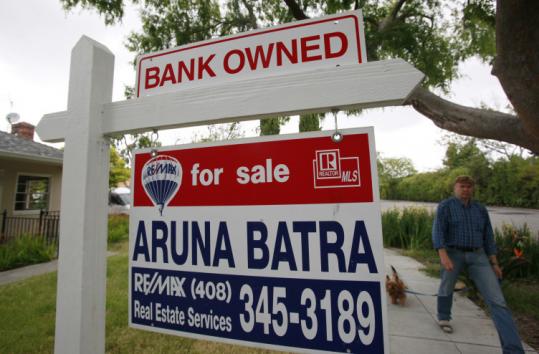
Photo: Paul Sakuma, Associated Press


By Doug Beaton

Posted in Foreclosure | Comments closed

Reasons why bankruptcy is a better option than a debt settlement service

Thinking about comparing bankruptcy with one of those debt settlement services that are constantly on late night TV and radio?

What’s the difference anyway?

There are several differences, and bankruptcy typically comes out as the better option. Consider that in bankruptcy, you can eliminate virtually all unsecured debts, as opposed to the 50% that most debt companies crow about.

In a bankruptcy, there is no problem dealing with creditors who refuse to settle — they just don’t have that option, period.

While a bankruptcy is a hit on your credit rating, it isn’t the constant drain on your score that often happens with debt settlement. While you are funding your settlement account, your credit is steadily deteriorating; after a bankruptcy, you have a chance to build it back up.

And almost always, bankruptcy is cheaper in the long run. Legal and filing fees are a one-time cost, not the ongoing monthly expense of debt settlement commissions.

If you would like to know more about the differences between debt settlement firms and bankruptcy, there is a great post about it here.


By Doug Beaton

Posted in Practical tips | Comments closed

Merrimack Valley foreclosures blamed on high unemployment

More long-term homeowners with “good’’ fixed-rate mortgages are facing foreclosure, likely because of job losses, according to a University of Massachusetts Lowell researcher.

The financial industry appears to have worked through much of the “bad’’ adjustable-rate mortgages from the housing bubble, many from predatory lenders, UMass Lowell researcher and writer Keith Vaillancourt told the Boston Globe .

More and more long-term homeowners with conventional fixed rate loans are facing foreclosure this year, indicating the problem is spreading rapidly to middle class people hit with job cutbacks.

“We’ve been seeing families affected more and more by the poor job market, families losing income due to job loss or hours being cut or overtime being cut,’’ Jaunita Bonilla, a director at Lawrence Community Works, said. “In some cases, families purchase their home with two jobs, it was the only way they could afford to purchase a home . . . and they’ve lost one of those jobs. It’s a vicious cycle going on.’’

Writing in the Merrimack Valley Housing Report, Vaillancourt reported that pending orders of notice and actual foreclosures are up over 2009 in Haverhill, Lawrence, Lowell, and Methuen, sometimes more than double. Even suburban Dracut showed large increases. Only Lawrence stayed level in actual foreclosure deeds.

Emily Rosenbaum of the Home Preservation Center in Lowell related a typical case story: “One gentleman we helped recently was a contractor who had his own construction company who had to close it due to lack of business. Now he works at Lowe’s,’’ said Rosenbaum. “He was in his mid-50s. We were able to get him a loan modification; he’s going to be OK, he saved his home. But he had to make some dramatic lifestyle changes.’’

An additional kicker is that each foreclosure adds to the inventory of “REO” properties — bank held houses that depress the market while they sit idle, vacant, and deteriorationg as they wait to be sold.

If you are caught in a foreclosure situation, a bankruptcy filing might be able to help you in one of three ways: It can buy you more time in your house rent-free, while you search for new lodging; if you still have steady income, a house can be saved through Chapter 13; and bankruptcy avoids income tax complications associated with short sales and deeds in lieu of foreclosure.


By Doug Beaton

Posted in Foreclosure | Comments closed

Bill collector facing federal bankruptcy fraud charges

It’s never fun to write about other attorneys getting into serious problems, but the Boston Globe is reporting this morning that former Saugus attorney James Gregson is facing federal fraud charges relating to his own personal bankruptcy case.

Prosecutors are alleging that Gregson bought the rights to winning lottery tickets, and then failed to report the annuity payments he received from the lottery commission on his tax forms and on his own bankruptcy papers when he filed in October 2005. The U. S. Attorney said that Gregson’s bankruptcy trustee received a tip about the omissions in 2006, leading to the charges.

Attorney Gregson was disbarred in 2008. Ironically enough, he had operated as a collections attorney for most of his brief career.


By Doug Beaton

Posted in Bankruptcy News | Comments closed
Call now: (978) 975 - 2608